

Image: Samuel Barber
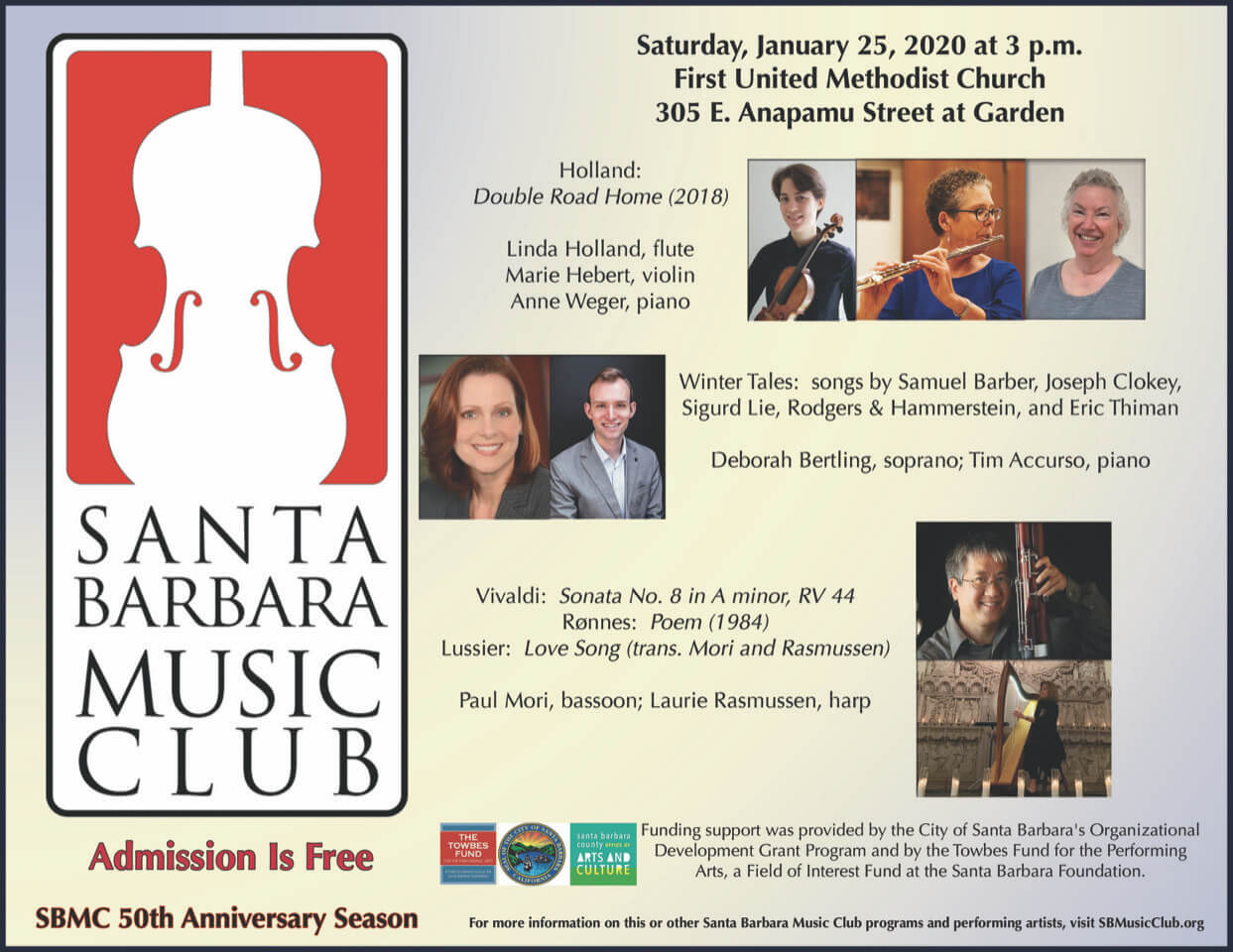
On Saturday, January 25 at 3:00 p.m. the Santa Barbara Music Club will present another program in its popular series of beautiful classical-music concerts. Works on this afternoon’s program include Linda Holland’s Double Road Home with the composer on flute, Marie Hébert on violin, and Anne Weger on piano. Next, soprano Deborah Bertling and pianist Tim Accurso present a set of songs: Samuel Barber’s “Must the Winter Come So Soon?” from Vanessa; Sigurd Lie’s “Sne;” Rodgers and Hammerstein’s “It Might As Well Be Spring,” from State Fair; Joseph Clokey’s “The Rose;” and Eric Thiman’s “I Love All Graceful Things.” Finally, bassoonist Paul Mori and harpist Laurie Rasmussen perform the Sonata VIII, RV 44, in A minor by Antonio Vivaldi; Poem for Bassoon and Harp by Robert Rønnes; and “Love Song” by Mathieu Lussier. This concert will be held at First United Methodist Church, 305 E. Anapamu Street at Garden, Santa Barbara. Admission is free.
Program Details
(b. 1960)
Marie Hébert, violin
Anne Weger, piano
(1900-1975)
Timothy Accurso, piano
(Traditional Japanese Folk Melody)
Laurie Rasmussen, harp
Timothy Beccue, cello
(1809-1847)
Notes on the Program
Linda Holland wrote Double Road Home for flutist Karin Nelson and violinist Maren Henle. Holland recalls that “several years ago Maren went through a devastating, near–death, illness. The doctors told her twin, Karin, that Maren probably wouldn’t make it. Rather than accept the prognosis, Karin refused to believe it was time for her sister to go. I had a conversation and walk with Karin when this was happening and it left a lasting impression on me; the connection between the sisters was stronger than all of the expert’s medical advice. Maren went on to recover fully. I wrote these three movements for Karin and Maren and tasked them with naming the piece. They gave it the title ‘Double Road Home.’ Double refers to the twins themselves and they both said the music sounds like a homecoming. Perhaps we are always working our way back to our center. This music is straight forward, written in my most accessible style, and is a celebration of the twins’ power of intuition, connection, and faith.” This afternoon’s concert features the work performed by violinist Marie Hébert, pianist Anne Weger, and the composer on the flute.
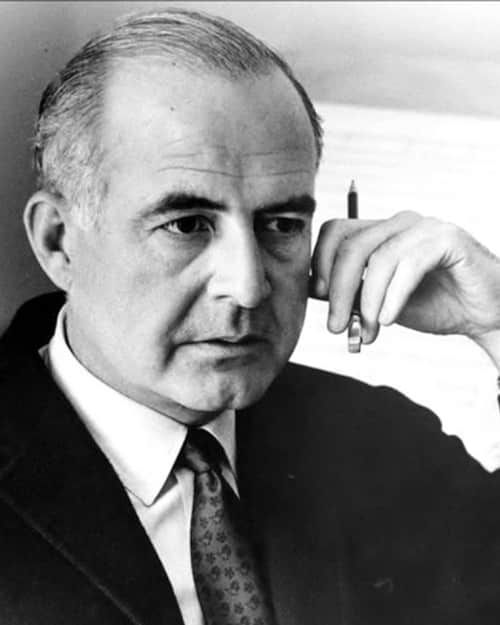
The next part of the program includes a smattering of vocal works depicting elements of nature and the seasons, performed by soprano Deborah Bertling and pianist Tim Accurso. The first, Samuel Barber’s (1910–1981) “Must the Winter Come So Soon?” comes from his 1959 opera Vanessa. The tune occurs at the beginning of the opera and sets the tone of seclusion and distance, overarching themes for much of the opera. The tune has become the most popular from the opera and enjoys a privileged status among Barber’s works for voice. By contrast, Norwegian composer Sigurd Lie (1871–1904) takes a different approach to the concept of winter in his work,“Sne” (snow). A romance with a text setting for voice, “Sne” visualizes the flurry of snowfall in a delicate but exciting accompaniment underpinning a beautiful melody. It has become the composer’s most famous work.
Bertling and Accurso then take us into warmer temperatures with “It Might As Well Be Spring,” by Richard Rodgers (1902–1979) and Oscar Hammerstein (1895–1960). The song premiered in the film State Fair (1945/remake in 1962) and has since led a charmed life: Rodgers and Hammerstein won the Academy Award for “Best Original Song” in 1945; the song is part of the only film score the duo wrote; finally, the song received no fewer than twenty covers from recording artists. The next work comes from American composer Joseph Clokey’s (1890–1960), “The Rose.” Clockey wrote both sacred and secular music and had a gift for distilling imagery into succinct, miniature forms, as evidenced by this wistful and touchingly melancholic composition. Bertling and Accurso close their set with a fitting companion piece to “The Rose,” English composer Eric Thiman’s (1900–1975) “I Love All Graceful Things.” This piece also conveys an element of longing, clothed in the imagery of flowing water, growing trees, and the clouds in the sky.
This afternoon’s program concludes with a trio of works performed by bassoonist Paul Mori and harpist Laurie Rasmussen. They open with the Sonata VIII, RV 44, in A minor by Antonio Vivaldi (1678–1741), which originally was a sonata for cello and basso continuo. The work belongs to a set of six sonatas Vivaldi composed between 1720 and 1730 and ranges from long, lyrical, ornamented lines in the slow first and third movements to lively, rhythmically vibrant dances for the fast second and fourth movements. The second piece is Poem for Bassoon and Harp, by Norwegian composer and bassoonist Robert Rønnes (b. 1959). The composer dedicated his professional life to promoting the bassoon and expanding its repertoire, evidenced by this extremely lyrical and melodically driven piece, which he wrote in 1984. Much like Sigurd Lie, he – and perhaps many Norwegian composers – had the gift of translating the great land and seascapes of the country into sonic approximations. The final work of this afternoon’s program is Love Song by Mathieu Lussier. Much like Rønnes, Lussier maintains an active career as conductor and bassoon soloist, in which he promotes works for the instrument, as well as early-music repertoire. As Mori and Rasmussen demonstrate, Lussier’s penchant for older music manifests in an intensely romantic idiom.
The Performers

Timothy Accurso, pianist, joined the Santa Barbara Opera team as Principal Pianist and Music Administrator in 2018, after having been on the music staff of the Palm Beach Opera and the Seagle Music Colony. He earned his BM Degree at Susquehanna University and his MM Degree at the Univerity of Illinois, thereafter becoming Resident Artist with the Utah Opera as well as Young Artist with Opera Saratoga, where he now spends his sumers on staff. Tim coaches with the Chrisman Studio Artists, engaging in education initiatives of Opera SB.
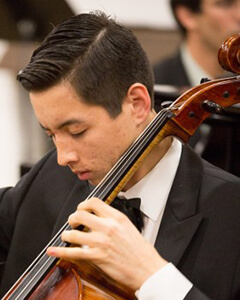
Timothy Beccue, cellist, has won numerous awards for his performances spanning North America and Europe, including First Place in the 2018 SB Performing Arts Scholarship Foundation Competition. He graduated with a physics degree from Westmont College, where he studied cello with Trevor Handy, has been soloist with the Westmont Orchestra and West Coast Symphony, and contracts as substitute cellist with the SB Symphony. In addition to his musical pursuits, he works with robotic telescopes at Las Cumbres Observatory.
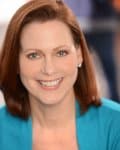
Deborah Bertling (Soprano) earned her Bachelor of Arts degree at Bob Jones University, Greenville, SC. She also earned a certificate at American Academy of Dramatic Arts in Los Angeles. She has performed in dozens of operas, plays, and concerts throughout California, most recently in Gianni Schicchi and Suor Angelica with Opera Santa Barbara. She is President of Performing Arts Scholarship Foundation, 1st Vice President of Community Arts Music Association, music docent in local elementary schools and mentor with Royal Family Kids. She will appear in the world premiere full-length feature film, Mirror Of My Soul, March of 2017. www.deborahmarksbertling.com
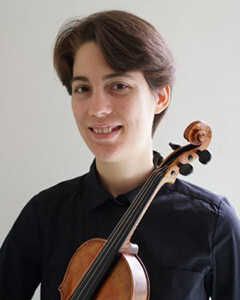
Marie Hébert, violin, is active as soloist, chamber musician, and teacher. A former SB Music Club Scholarship awardee, she earned her BM and MM Degrees at UCSB, has performed with the Montecito International Music Festival, and toured in China with the Young Musicians Foundation Debut Orchestra. Marie is currently Teaching Artist and Youth Ensembles Personnel Manager with the SB Symphony, Teaching Artist for SB Strings, violinist with the Folk Orchestra of SB, and maintains a private violin/viola teaching studio.

Linda Holland is a flutist/composer whose works have been performed internationally: in Carnegie Hall, London’s Wigmore Hall, and at National Flute Conventions across the U.S. A SBCC faculty member since 1998, her honors include awards from the Festival of New American Music, Society of Composers, Inc., and ASCAP. Dr. Holland earned her BM from CSU Sacramento, MM in Composition from San Francisco Conservatory, and both MM in Flute and PhD in Composition from UCSB.
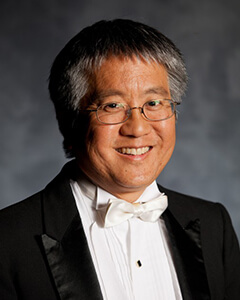
Paul Mori, bassoon, received his earliest start in music through school music programs here in his native Santa Barbara and continued his musical education at Westmont College. From here, he relocated to Baltimore to study at the Peabody Institute of Johns Hopkins University, earning a master’s degree in bassoon performance with Phillip Kolker and later completing a doctorate in orchestral conducting, studying with the legendary Frederik Prausnitz. He served as music director of orchestras in the Pacific Northwest and Baltimore before returning to Santa Barbara. Currently, he conducts the Santa Barbara Reading Orchestra and is on the music faculty at Westmont College.
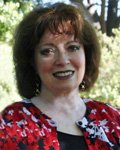
Betty Oberacker, pianist, is internationally acclaimed for her interpretations of both traditional and contemporary solo and chamber music repertoire, and has toured throughout Europe, Israel, Asia, Australia, New Zealand, Mexico and the U.S., including performances at Carnegie Hall, Amsterdam Concertgebouw, Berlin Philharmonic Hall and Vienna Musikverein. She has been Artist-in-Residence at 55 universities, conservatories and music festivals worldwide, and many important composers have dedicated their compositions to her. Her musical gifts were evidenced at three, when she began to play the piano and compose entirely by ear. Piano lessons started at age seven, and at nine she was accepted on scholarship as the only child student of the noted pianist Beryl Rubinstein. Her BM/MM Degrees are from the Cleveland Institute of Music, and her DMA Degree is from Ohio State University, where she was concomitantly a member of the piano faculty. Her discography includes Bach’s Well-Tempered Clavier (Clavier Records), A Bach Commemorative Recital (MIT Great Performances Archives), Chamber Music of Emma Lou Diemer (Orion), Schönberg’s Pierrot Lunaire (Century), John Biggs’ Variations on a Theme of Shostakovich (VMM), and Diemer’s Piano Concerto (MMC), the latter two works composed for Oberacker. Honors accorded her include a Fulbright Research Fellowship to Italy and the University of California Distinguished Teaching Award, and her students hold important positions as performers and teachers in the U.S., Asia and Europe. Dr. Oberacker is UCSB Professor Emeritus, and enjoys an active performing, teaching and chamber music coaching schedule.

Laurie Rasmussen, harpist, has toured across the U.S., Canada, and Europe as soloist and collaborative artist. She graduated from the University of Colorado at Boulder, was top prize winner at the 2007 Lyon & Healy International Jazz and Pop Harpfest Competition, and was featured artist at Celtic music festivals in Germany and Italy. Laurie is currently harpist with the SB Folk Orchestra, is Instructor at SB City College, maintains a private teaching studio, and is owner of the harp showroom, Harps by the Sea.
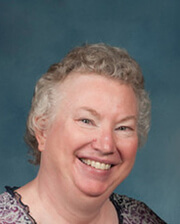
Anne Weger, pianist, has been involved in numerous musical theater productions and is an active collaborative pianist involved in local string, wind, and vocal studios. She received her AA in Music from SBCC, studied with Dr. Reginald Stewart at the Music Academy of the West, and continued her studies at California Institute of the Arts. Anne was pianist with the SB Master Chorale and Assistant Director of Music at First United Methodist Church, and is currently pianist on the staff of St. Mark United Methodist Church.