

Image: SBMC Holiday Concert
On SATURDAY, December 17 at 3 p.m. the SANTA BARBARA MUSIC CLUB will present another program in its popular series of concerts of beautiful Classical music. This concert will be held at the First United Methodist Church, 305 East Anapamu St., in downtown Santa Barbara. Admission is free.
One of the highlights of Santa Barbara Music Club’s concerts is the opportunity for audiences to hear great music from a variety of historical periods, with a diversity of musical forms, performed by excellent artists. This concert features music for two pianos from the late nineteenth and early twentieth centuries played by two piano duos: Bridget Hough/Christopher Davis and Betty Oberacker/Eric Valinsky.
Program Details
(1841-1894)
- Très vite et impétueusement
- Mouvement modéré de Valse
- Animé
(1862-1918)
(1835-1921)
arr. Ralph Berkowitz
(1875-1937)
Notes on the Program
Of the three works to be performed by pianists Bridget Hough and Christopher Davis, only one, Emmanuel Chabrier’s Trois valses romantiques, was originally written for two pianos. Chabrier was a French romantic composer and pianist known primarily for two orchestral works: España and Joyeuse marche. The Trois valses romantiques were composed in 1883 and demonstrate Chabrier’s grasp of many forward-thinking compositional devices: chains of ninths, the use of pentatonic scales, and sharp and spontaneous rhythms.
Premiered in 1901, Sergei Rachmaninoff’s Piano Concerto No. 2 in C minor, Op. 18 is probably his most enduringly popular work. It embodies many of the characteristics commonly associated with Rachmaninoff’s music: intensely passionate melodies, rich lyricism, and sumptuous harmonies.
“The Swan,” a haunting and lyrical movement for cello and two pianos, is one of the more enduringly familiar movements from Camille Saint-Saëns’ Le carnaval des animaux (The Carnival of Animals). Written in 1886, the work is in fourteen movements, each depicting a different animal—some human, as in movement eight, “People with Long Ears” and movement eleven, “Pianists.” In its original version, the work is scored for eleven instruments, including two pianos. “The Swan,” the penultimate movement, was the only movement published in Saint-Saëns’ lifetime—he feared that publication of the work as a whole would detract from his reputation as a serious composer—and proved to be so popular that it has been arranged for many different combinations of instruments, including the one to be heard in this concert.
The second half of the program features pianists Betty Oberacker and Eric Valinsky performing Claude Debussy’s Prélude à l’après-midi d’un faune and Maurice Ravel’s Boléro
.
Composed between 1891 and 1894, Debussy’s Prélude à l’après-midi d’un faune was complete in orchestral and duo piano versions in 1895. It was written at the request of the poet Stephan Mallarmé and originally was to be part of a theater project centered on Mallarmé’s poem L’après-midi d’un faune. The work was initially criticized by some for its “formlessness,” something which today seems completely unfounded. His influences during the years of writing the work include the music of Liszt and Wager, Javanese gamelan music heard at the 1889 Paris Exposition, and his friendships with impressionist painters and symbolist writers and poets.
Boléro began as a dance work. Commissioned in 1928 by Russian actress and dancer Ida Rubinstein, it was premiered in November 1928 in Paris. Ravel himself arranged a version for two pianos, published in 1930. It is a curious work in that structurally it is a giant crescendo. Not only does Ravel move from soft to loud, but he begins with only a snare drum and string pizzicato, adding more and more instrumental color as the work progresses. The duo piano version demonstrates convincingly that there is more to Boléro than a virtuoso display of orchestration: the work is as compelling for two pianos as it is for full orchestra.
The Performers

Bridget Hough, pianist, is equally at home in solo, chamber, and duo repertoire, and is regularly engaged for competitions, performances, and recording projects. A piano student of Paul Berkowitz, Robert Koenig, and Betty Oberacker, she has been an invited pianist for summer festivals, including SongFest at the Colburn School (Los Angeles), the Schubert-Institut (Austria), and the Fall Island Vocal Arts Seminar, where she was a Fellow for two seasons. She earned her B.M. Degree summa cum laude and her D.M.A. Degree from UCSB. Committed to new music, Dr. Hough has premiered works by many contemporary composers, including Tom Cipullo, Juliana Hall, Jake Heggie, Libby Larsen, Thea Musgrave, John Musto and John Villar.
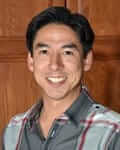
Christopher Davis, pianist, has been concerto soloist with several orchestras including the Northwest Arkansas Symphony Orchestra, and has studied with renowned teachers and scholars in Germany, Austria, and Portugal. He earned his BA Degree from UC San Diego, his MM Degree from the University of Arkansas, and his DMA Degree from UCSB. In addition to serving as the Music Academy of the West’s House Manager (2009-2016), Dr. Davis has been on the staff of the Ojai Music Festival and Westmont College (2014-2016), and has worked for Camerata Pacifica, collaborating independently with many of their musicians.
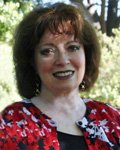
Betty Oberacker, pianist, is internationally acclaimed for her interpretations of both traditional and contemporary solo and chamber music repertoire, and has toured throughout Europe, Israel, Asia, Australia, New Zealand, Mexico and the U.S., including performances at Carnegie Hall, Amsterdam Concertgebouw, Berlin Philharmonic Hall and Vienna Musikverein. She has been Artist-in-Residence at 55 universities, conservatories and music festivals worldwide, and many important composers have dedicated their compositions to her. Her musical gifts were evidenced at three, when she began to play the piano and compose entirely by ear. Piano lessons started at age seven, and at nine she was accepted on scholarship as the only child student of the noted pianist Beryl Rubinstein. Her BM/MM Degrees are from the Cleveland Institute of Music, and her DMA Degree is from Ohio State University, where she was concomitantly a member of the piano faculty. Her discography includes Bach’s Well-Tempered Clavier (Clavier Records), A Bach Commemorative Recital (MIT Great Performances Archives), Chamber Music of Emma Lou Diemer (Orion), Schönberg’s Pierrot Lunaire (Century), John Biggs’ Variations on a Theme of Shostakovich (VMM), and Diemer’s Piano Concerto (MMC), the latter two works composed for Oberacker. Honors accorded her include a Fulbright Research Fellowship to Italy and the University of California Distinguished Teaching Award, and her students hold important positions as performers and teachers in the U.S., Asia and Europe. Dr. Oberacker is UCSB Professor Emeritus, and enjoys an active performing, teaching and chamber music coaching schedule.
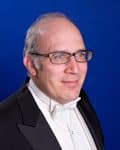
A native Manhattanite, Eric Valinsky has, for more years than he would like to admit, maintained dual careers in computer systems architecture and music. He was educated at the Oberlin Conservatory of Music and the University of Illinois, finally achieving his DMA in music composition from Columbia University. He studied composition with Walter Aschaffenburg, Salvatore Martirano, Jack Beeson, and Darius Milhaud; piano with Sara Crawford Drogheo and Emil Danenberg; and conducting with Harold Farberman. While living in Los Angeles, he became music director and composer-in-residence for The Storie-Crawford Dance Theatre Ensemble. Returning to New York, he served in a similar capacity for Danny Buraczeski’s Jazzdance, Uris Bahr and Dancers, and The New American Ballet Ensemble as well as composer-in-residence for The Rachel Harms Dance Company, Opera Uptown, and the Dance Department at City College of New York. He is currently Music Director for the American Dance & Music Performance Group and moonlights as founder and partner of Inlineos LLC, a strategic Internet consulting company.
This project is funded in part by the Community Arts Grant Program using funds provided by the City of Santa Barbara in partnership with the Santa Barbara County Arts Commission.