

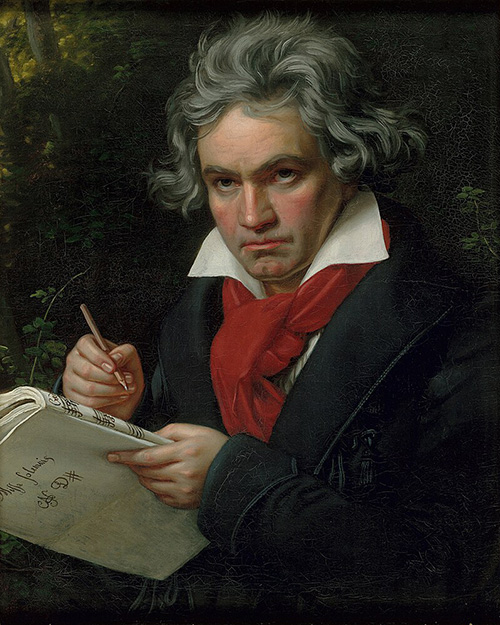
Image: Ludwig van Beethoven By Joseph Karl Stieler - Google Arts & Culture, Public Domain
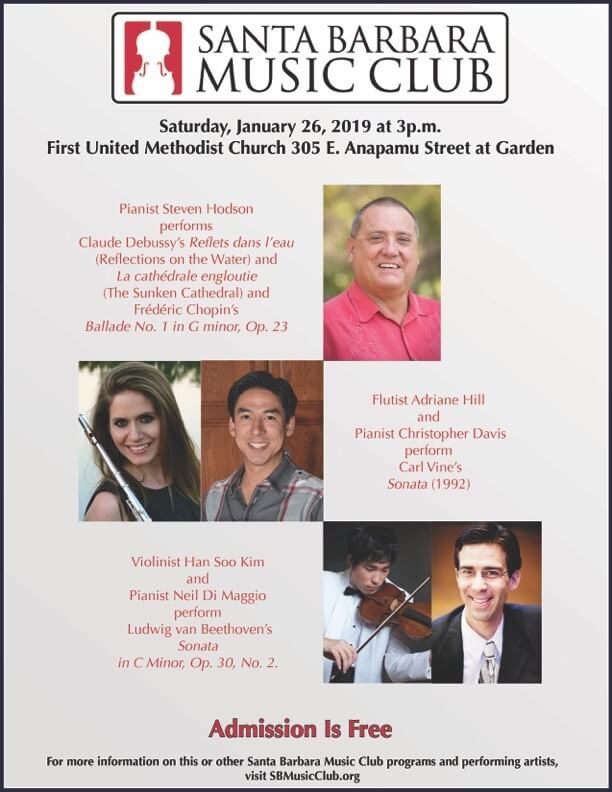
On Saturday, January 26 at 3 p.m. the Santa Barbara Music Club will present another program in its popular series of concerts of beautiful Classical music. On this afternoon’s program, pianist Steve Hodson, flute and piano duo Adriane Hill and Christopher Davis, and violin and piano duo Han Soo Kim and Neil Di Maggio feature pieces “breaking the mold.” Set against the backdrop of their socio-historical, biographical, and aesthetic contexts, each of these pieces showcase an element of progressiveness, something groundbreaking. The afternoon’s performance includes three pieces for solo piano: Frédéric Chopin’s Ballade No. 1 in G Minor, Op. 23; Claude Debussy’s Reflets dans l’eau and La Cathédrale engloutie. The following works are for instrumental duos, Carl Vine’s Sonata for Flute and Piano and Ludwig van Beethoven’s Sonata for Piano and Violin in C Minor, Op. 30/2 . This concert will be held at First United Methodist Church, 305 East Anapamu (at Garden), Santa Barbara. Admission is free.
Program Details
(1810-1849)
(b. 1954)
- Fast
- Slow
- Very Fast
Christopher Davis, piano
(1770-1827)
- Allegro con brio
- Adagio cantabile
- Scherzo: Allegro – Trio
- Finale: Allegro
Neil Di Maggio, piano
Notes on the Program
This afternoon opens with pianist Steve Hodson offering some of the most beloved pieces of the standard Western art-music repertoire. If there were a definitive required-listening list of piano music, then Frédéric Chopin’s (1810-1849) Ballade No. 1 in G Minor, Op. 23 (1835/6), and Claude Debussy’s (1862-1918), Reflets dans l’eau (Reflections on the Water, 1905) and La Cathédrale engloutie (The Sunken Cathedral, 1905) surely would appear on it. They each come from larger collections of works; each break ground in some respect; and each refers to a narrative or image, however tightly or loosely.
The Four Ballades of Chopin remain staples in piano literature due largely to their lyrical beauty and fiendish difficulty. The premiere ballade enjoys historical significance in the Romantic era. First, for a time, it remained Chopin’s favorite composition. Second, and most importantly, the ballade represents Chopin’s attempt to produce a viable alternative to the then-hegemonic sonata form – an example being the first movement of Beethoven work on this afternoon’s program. In addition, Chopin did not base Op. 23 on any pre-existing form in Western music, so he was charting new territory of organization, thematic treatment, and expression. In addition, scholars recently have discovered the narrative structure of the ballade modeled in part on a story: Adam Mickiewicz’s pseudo-medieval narrative poem Konrad Wallenrod (1828), a tragic tale of Polish honor and resistance. Despite its being one movement, the ballade effectively balances Chopin’s working through the creation of a new genre while tightly economizing thematic development in service of telling a vivid tale.
In many ways, Debussy saw himself as an heir to Chopin, as both composers experimented with inherited genres and, to varying degrees, attempted to develop a specifically French pianism. As Chopin broke molds with his ballades, so too did Debussy with his first book of genre-defying Images (1903-1905). Debussy was so confident with Images, he rested on the intuition that the pieces would take their place in the pantheon of the classical-music canon alongside the works of Schubert and Chopin. The rest, as they say, is history. The first piece of Images is the famous Reflets dans l’eau. Water: an image of endless possibilities. It is at once both ominous and peaceful. Rapid and placid. Deadly and life-giving. Reflets dans l’eau illustrates Debussy’s exploring some of these features. He constructs an harmonic backdrop alternating between pentatonic and whole-tone sound worlds. Both convey a sense of wandering and buoyancy due to the absence of the half-step resolution found in traditional tonality. In addition, Debussy plays with the elusiveness of water as he speeds and slows the rhythmic figures. The melody, which is a brief three-note descent, always appears against a constantly shifting harmonic and rhythmic background – it’s the only thing that stays constant amid a sea of reflections shimmering in and out of focus. But Debussy does not stop there in his evocation of water.
The prelude La Cathédrale engloutie (The Sunken Cathedral, 1905) lists as the tenth in his first book of twelve Préludes (1909-1910). The piece tells of the legend of Ys, an island off the coast of Brittany, France. Ys was the jewel of Europe and unparalleled in beauty, yet its fate lay in destruction due to the evil deeds of its inhabitants. The ocean thus rose up to engulf the island, including its tallest structure, the cathedral. Much like Reflets dans l’eau, Debussy begins the prelude with alternating harmonic backdrops, in this case modality and pentatonicism. Moreover, he employs a texture connoting medieval organum. In effect, we may (or may not) think of the overtones of church bells ringing in the distance, an archetypical choir chanting during Mass, or the deep, cavernous space of a cathedral throughout which bells and choir voices echo. Next comes a sound more contemporary to early Debussy, a mix of tonal and whole-tone languages set with wave-like figurations. We may or may not picture the waves of the ocean; or perhaps the object the waves either are covering or revealing. In any case, Debussy masterfully paces ebb and flow, as well as anticipation and climax, as he returns to a grand statement of the opening modal material. The cathedral now has emerged from the depths for all to see. But only for a moment, however. As quickly as it emerged, the cathedral sinks back into the ocean not to reveal itself again for 100 years, so the legend goes.
The prolific Australian composer Carl Vine (b. 1954) is among the most well-known composers in the country’s history and may be the most versatile. In addition to writing contemporary-classical works, he is famed for composing for the theater, as well as electronic music. His music thus possesses an agility with some finely honed genre-crossing techniques. He composed the Sonata for Flute and Piano (1992) with an eye (or ear) to have both instruments function as equal partners. In this context, Vine inherited a classical-music concept of elevating instruments traditionally used for accompaniment, in this case the piano, and making it as important as the featured instrument. Vine does here what Bach did for the harpsichord in the Brandenburg Concerto No. 5 and what Beethoven did in most of his duo sonatas. According to Vine, a consistent barrage of sixteenth-note figures create a web, which is an effective image to visualize when navigating through this afternoon’s performance by pianist Christopher Davis and flutist Adriane Hill. In the first movement, for example, Vine uses the rhythm as a means to increase chromaticism within the melodic content. In subsequent movements, however, he uses the figures to intensify the rhythmic drive. Whereas the first and third movements complement each other because of the focused homogenous interaction between the instruments, the second movement presents a study in polarization. As Vine writes, “the flute’s sinuous melodic ability [contrasts] against static ringing qualities of the piano.” He may have inherited a procedure popularized by Beethoven, but Vine departs from tradition in his treatment of color, rhythm, and form.
And what better way to demonstrate departure from tradition by presenting an example of said tradition? Thus we conclude today’s program with violinist Han Soo Kim and pianist Neil Di Maggio performing Ludwig van Beethoven’s (1770-1827) Sonata for Piano and Violin in C Minor, Op. 30/2 of 1802. The Op. 30 collection of three sonatas emerged against the backdrop of Beethoven’s coming to terms with progressive deafness as articulated in the famous Heiligenstadt Testament to his brother, in which the composer reconciles despondency with the resolve to keep composing. The sonatas offer us a musical analogue to the difficult crossroads Beethoven faced. With regard to the craft of composition, he hit a wall with writing in conventional genres. Op. 30 suggests his struggle with the anxieties of responding to the question “Where do I go from here?” and wiping the creative slate clean. Thus, the three sonatas reveal Beethoven’s working through technical and formal problems, such as balancing sonorities of the two contrasting instruments and their colors. More importantly, Op. 30/2 locates the beginnings of Beethoven’s experimentation and expansion. He begins to developing large scale forms from small, rhythmic motives, as opposed to long, symmetrical phrases, as evinced by the first movement’s opening melody. In addition, this sonata carries prestige among Beethoven’s earlier works, as he cast it in C minor. Several scholars and program writers have observed Beethoven’s lending just a bit more gravitas to C minor works than others. Op. 30/2 shares tonality with works including The Pathetique and final Piano Sonatas, the Third Piano Concerto, and the Fifth Symphony – that’s some lofty company.
The Performers
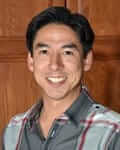
Christopher Davis, pianist, has been concerto soloist with several orchestras including the Northwest Arkansas Symphony Orchestra, and has studied with renowned teachers and scholars in Germany, Austria, and Portugal. He earned his BA Degree from UC San Diego, his MM Degree from the University of Arkansas, and his DMA Degree from UCSB. In addition to serving as the Music Academy of the West’s House Manager (2009-2016), Dr. Davis has been on the staff of the Ojai Music Festival and Westmont College (2014-2016), and has worked for Camerata Pacifica, collaborating independently with many of their musicians.
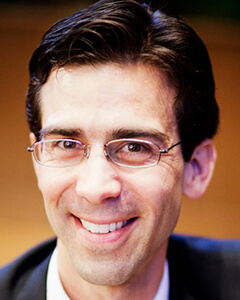
Neil Di Maggio, pianist, enjoys a dual career as solo and collaborative pianist and as a researcher for Westmont College. His performing career has taken him from California to Phoenix to New York City, and he recently served on the faculty of the Westmont Academy for Young Artists. He earned his BM Degree, summa cum laude, from San Jose State University, MM Degree from the San Francisco Conservatory, and MM Degree in Collaborative Piano from UCSB, studying with Paul Berkowitz Anne Epperson, and Yael Weiss. Currently Director of Research in the Office of College Advancement at Westmont, Neil maintains a private piano studio, and his students are frequent award winners with the Santa Barbara Music Club and the Performing Arts Scholarship Foundation competitions.
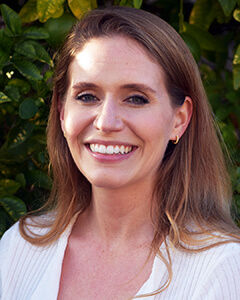
Adriane Hill Cleary is a flutist based in Santa Barbara, CA, where she works as the Marketing and Communications Manager for the UC Santa Barbara Department of Music. She studied performance at UC Santa Barbara (M.M.) with Jill Felber and the University of Central Florida (B.M.) with Dr. Nora Lee Garcia. As a member of the new music group, the Now Hear Ensemble, she has toured throughout much of California, including appearances at the Center for New Music in San Francisco and the Roy and Edna Disney/CalArts Theater (REDCAT) in Los Angeles. Adriane also serves as the Marketing and Communications Manager for the Los Angeles-based composer-directed collective, Synchromy. Learn more at www.adrianehill.com.
Steve Hodson is Professor of Music at Westmont College where his duties have included teaching piano and organ, conducting, and music survey, and leading various singing groups. He conducts the Santa Barbara Master Chorale and serves as organist at First United Methodist Church of Santa Barbara. Hodson holds a Doctor of Musical Arts from the University of Colorado, Boulder. He is Vice-President of the Western Division of the American Choral Directors Association (encompassing California, Hawaii, Nevada, Utah, and Arizona), and past President of California ACDA. He enjoys performing on piano, organ, and harpsichord and is an accomplished accompanist.
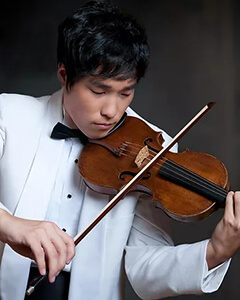
Han Soo Kim, violinist, is an award-winning and internationally accomplished artist who has performed to critical acclaim in numerous countries on four continents. Dr. Kim has concertized extensively as solo performer, duo-recitalist and chamber musician. In the United States, he has performed in some of the nation’s most prominent venues including Alice Tully Hall, Avery Fisher Hall, Boston Symphony Hall, Weill Recital Hall and Isaac Stern Auditorium at Carnegie Hall, Cutler Majestic Theater, Jordan Hall, Kaufmann Concert Hall, and The Kennedy Center. Performances have also led him to institutions and festivals including Académie Internationale de Courchevel, Boston Conservatory, Columbia University, Le Domaine Forget International Music Festival, The Juilliard School, Longy School of Music, Manhattan School of Music, Mannes College, Meadowmount School of Music, Morningside Music Bridge, Musicorda, New England Conservatory, and Stony Brook University. He has appeared as soloist with orchestras in the US and abroad performing standard concertos to contemporary world premieres. As a Promessa Records Artist he has released Encore Favori, a solo CD featuring a dozen encores and virtuosic showpieces, and will be recording the next album in 2021. He is Founder and the violinist of The Finehouse-Kim-Yhee Trio.
Dr. Kim has earned his Doctor of Musical Arts in violin performance under a fellowship grant. His Bachelor of Music and Master of Music degrees in violin performance are from The Juilliard School where he was a merit scholarship recipient. His influential teachers and mentors include Roman Totenberg, Sally Thomas, and Pamela Frank. He has worked with distinguished chamber music artists including Emerson, Guarneri, Juilliard, and Orion String Quartets. He is a Bella Rosins Artist and performs on a Carlo Antonio Testore of 1721. His CDs can be purchased at the Westmont College bookstore and hanjoannekim.com. In his spare time, he enjoys spending time with his wife, son Kian and dog Dolce, exploring restaurants in Santa Barbara, playing pool, and gardening.