

Image: Alexander Borodin | Public Domain
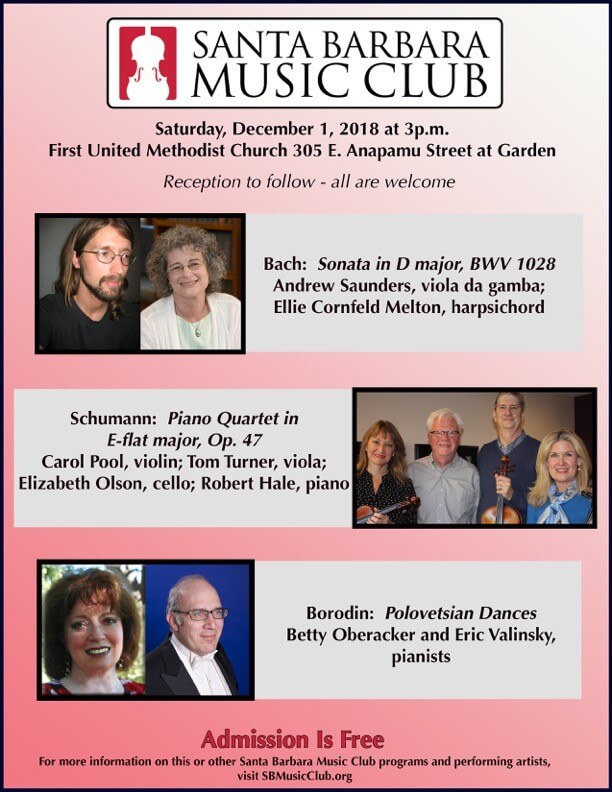
On Saturday, December 1 at 3 p.m. the Santa Barbara Music Club will present another program in its popular series of concerts of beautiful Classical music. The program features works that reconcile old and new, nostalgia and progression: J.S. Bach’s Sonata in D for Viola da gamba and Harpsichord, BWV 1048; Robert Schumann’s Piano Quartet in Eb, Op. 47; and Alexander Borodin’s Polovtsian Dances arranged for two pianos. This concert will be held at First United Methodist Church, 305 East Anapamu (at Garden), Santa Barbara. Admission is free.
Program Details
(1685-1750)
- Adagio
- Allegro
- Andante
- Allegro
Ellie Cornfeld Melton, harpsichord
(1810-1856)
- Sostenuto assai – Allegro ma non troppo
- Scherzo: Molto vivace
- Andante cantabile
- Finale: Vivace
Tom Turner, viola
Elizabeth Olson, cello
Robert Hale, piano
(1883-1887)
Trans. Ann Pope
Notes on the Program
The Baroque (or Early-Modern) period carries a reputation for the dramatic, as Europe experienced rapid social, economic, and intellectual change. An instance of such change occured the technological advances brought to instruments. For example, the cello and piano gradually replaced the viola da gamba and the harpsichord, respectively, as the former offered players increased range, dynamic expression, and resonance. But thanks to the Early-Music revival of the 20th century, we can enjoy J.S. Bach’s Sonata in D Major for Viola da Gamba and Harpsichord, BWV 1048, performed today by Andrew Saunders and Ellie Melton, respectively. The composer did not so much “intend” the instrumentation to be set in stone; rather, such were the resources at his disposal. Composed around 1740 in Leipzig, Bach (1685 – 1750) comixed in this piece the old and the new: increasingly antiquated instruments cast in the fresh slow-fast-slow movement scheme. Archangelo Corelli popularized the three-movement plan, which became standard for compositions like the sonata da camera, sonata da chiesa, and the concerto. Bach, however, played a bit with the scheme and imbued concerto-like features in the D Major Sonata. On the one hand, he prefixed the opening movement with a brief Adagio, a practice that became more common in Classical-era works. On the other hand, the harpsichord originally had an accompanimental role, Bach gave it prominence almost equal to that of the viola da gamba.
Bach symbolized endless inspiration to the Romantics. Many composers forged strong associations between Bach and the city of Leipzig, as it was there he composed among his most monumental, contrapuntal works. It was also in Leipzig that Felix Mendelssohn rediscovered Bach and introduced his music to a general public in 1829. Robert Schumann (1810 – 1856) also lived and composed in Leipzig. It is no surprise, then, both composers were members of the so-called “New Leipzig School.” In fact, possibly as an homage to Bach, Schumann often reserved contrapuntal writing for finales to his multi-movement compositions. Schumann’s Piano Quartet in Eb, Op. 47, demonstrates such a finale. Written in 1842, almost 100 years after Bach’s composing the D Major Sonata, Schumann’s Piano Quartet resulted from his year of composing chamber music almost exclusively. Its form recalls that of Bach’s Sonata, the fast-slow-fast plan; however, Schumann interpolates a fourth movement, a light, dance-like scherzo modeled after those of the Viennese Classical composers. The first movement is a typical fast movement in sonata-form; then comes the scherzo. A lyric, song-like slow movement follows as the third movement. Finally, Schumann’s nostalgic turn to Bach emanates from the fourth movement in the form of fugal writing a thrilling ride of virtuosic bravura presented today by violinist Carol Pool, violist Tom Turner, cellist Elizabeth Olson, and pianist Robert Hale.
Schumann is not the only composer on today’s program who found inspiration from the past. The original version of Alexander Borodin’s (1833 – 1887) most beloved contribution to the Western art-music repertory, the Polovtsian Dances, included a chorus. And it opens with rhetoric that smacks of nostalgia: “On the wings of gentle zephyrs seek thou, / O tender song, my native country, / The land where many a time I used to listen / To songs most sweet and dear to free-born maidens.” Borodin scored these dances as a climax to the second act of his unfinished opera Prince Igor, the story of which is based on an arguably spurious Russian medieval tale. Authentic or not, however, the “oldness” of the tale fit well into the 19th-century Russian Nationalist movement within the arts. Borodin, one of Russia’s “Mighty Handful” of composers, took on the project to compose Prince Igor as a means to distinguish Russian music from that of the then-hegemonic Germany. So what better way to do it than to draw upon an irretrievable – possibly even fictitious – past and clothe it in some of the most memorable 19th-century melodies? Since its premiere at the Saint Petersburg Mariinsky Theatre in November of 1890, the Polovtsian Dances has enjoyed life beyond that of its original operatic context. The work has appeared in countless arrangements for instrumental ensembles and used for several representational programs often involving the intersection of Russian and Eastern culture in general. Today, pianists Betty Oberacker and Eric Valinsky perform an arrangement of the Polovtsian Dances for two pianos.
The Performers

Robert Hale, pianist, holds a degree in piano performance from Southern Illinois University. After working in arts administration, including Toronto’s Roy Thomson Hall, the Rochester Philharmonic, the Syracuse Symphony, and the Toronto Mendelssohn Choir, he changed careers to software development. Robert studies piano with Zeynep Ucbasaran and plays chamber music with friends and colleagues in the Santa Barbara area.
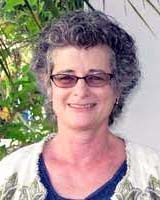
Ellie Cornfeld Melton, harpsichordist, received her BA Degree in Music from the School of Music at the University of Oregon and her MA Degree in Early Music Performance Practice from Stanford University. She has performed at the Peter Britt Festival in Jacksonville, Oregon) Old First Church in San Francisco, and with the University of Pennsylvania Baroque Ensemble.
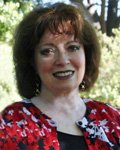
Betty Oberacker, pianist, is internationally acclaimed for her interpretations of both traditional and contemporary solo and chamber music repertoire, and has toured throughout Europe, Israel, Asia, Australia, New Zealand, Mexico and the U.S., including performances at Carnegie Hall, Amsterdam Concertgebouw, Berlin Philharmonic Hall and Vienna Musikverein. She has been Artist-in-Residence at 55 universities, conservatories and music festivals worldwide, and many important composers have dedicated their compositions to her. Her musical gifts were evidenced at three, when she began to play the piano and compose entirely by ear. Piano lessons started at age seven, and at nine she was accepted on scholarship as the only child student of the noted pianist Beryl Rubinstein. Her BM/MM Degrees are from the Cleveland Institute of Music, and her DMA Degree is from Ohio State University, where she was concomitantly a member of the piano faculty. Her discography includes Bach’s Well-Tempered Clavier (Clavier Records), A Bach Commemorative Recital (MIT Great Performances Archives), Chamber Music of Emma Lou Diemer (Orion), Schönberg’s Pierrot Lunaire (Century), John Biggs’ Variations on a Theme of Shostakovich (VMM), and Diemer’s Piano Concerto (MMC), the latter two works composed for Oberacker. Honors accorded her include a Fulbright Research Fellowship to Italy and the University of California Distinguished Teaching Award, and her students hold important positions as performers and teachers in the U.S., Asia and Europe. Dr. Oberacker is UCSB Professor Emeritus, and enjoys an active performing, teaching and chamber music coaching schedule.
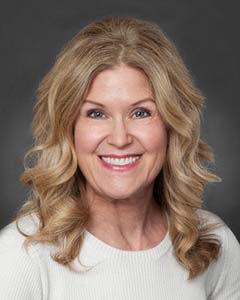
Elizabeth Olson, cellist, began music studies through public school music programs; continuing with private lessons, she currently studies with Geoffrey Rutkowski. She earned her BS Degree in Chemistry from Loma Linda University and her MS Degree in Accountancy from CSU San Bernardino. For the past ten years her passion has been chamber music, with performances including concerts at Loma Linda University and the Santa Barbara Music Club. Elizabeth is currently a CPA at Nasif, Hicks, Harris & Co. in Santa Barbara.
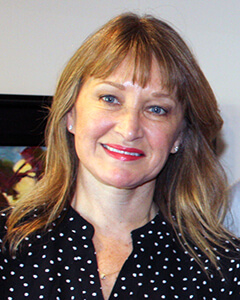
Carol Pool, violinist, began playing violin in the Houston Public School System, and received her BM and MM Degrees at the University of Houston and The Juilliard School. As an in-demand player in New York, she performed in Evita, Hairspray, and Phantom of the Opera, and with many symphony and ballet orchestras in New York and Los Angeles. In addition, she has recorded with such artists as Tony Bennett, Philip Glass, and Barbara Streisand, and has played on numerous movie sound tracks, such as Star Wars, Rio, Coco, and The Grinch.
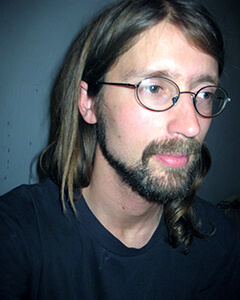
Andrew Saunders, viola da gambist, received his early training from Bill Darst, Professor of Baroque Violin at Oberlin Conservatory, with continued study at Viola da Gamba Society of America workshops. As cellist and double bassist, he has performed with the SBCC Symphony and the West Coast Symphony, and with chamber ensembles including Ensemble Aquila, the Paradox Trio, and the band, Waters Rising. Andrew performs on a viola da gamba left to him by Bill Darst when he passed away, and it is his inspiration that keeps his music alive.
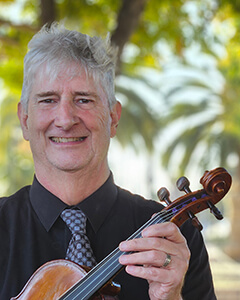
Tom Turner, violist, is a former President of the SB Music Club (2006-2008). Tom has been a violist for over 40 years, having performed with Santa Barbara Civic Light Opera, Santa Barbara Chamber Orchestra, Santa Barbara Symphony and Lompoc Pops. He has been Priincipal Violist and soloist with the Channel Islands Chamber Orchestra and Moorpark Symphony Orchestra. Tom has performed with the Santa Maria Philharmonic for over 30 years, and served as Principal Violist. Lately, he co-founded the Santa Barbara Chamber players. Now retired, he can play as much chamber music as possible and is thrilled to perform with Jane, Nancy,
and Mi-Young Kim.
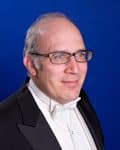
A native Manhattanite, Eric Valinsky has, for more years than he would like to admit, maintained dual careers in computer systems architecture and music. He was educated at the Oberlin Conservatory of Music and the University of Illinois, finally achieving his DMA in music composition from Columbia University. He studied composition with Walter Aschaffenburg, Salvatore Martirano, Jack Beeson, and Darius Milhaud; piano with Sara Crawford Drogheo and Emil Danenberg; and conducting with Harold Farberman. While living in Los Angeles, he became music director and composer-in-residence for The Storie-Crawford Dance Theatre Ensemble. Returning to New York, he served in a similar capacity for Danny Buraczeski’s Jazzdance, Uris Bahr and Dancers, and The New American Ballet Ensemble as well as composer-in-residence for The Rachel Harms Dance Company, Opera Uptown, and the Dance Department at City College of New York. He is currently Music Director for the American Dance & Music Performance Group and moonlights as founder and partner of Inlineos LLC, a strategic Internet consulting company.